Day 1: Arrival in Marrakech – Welcome to Morocco
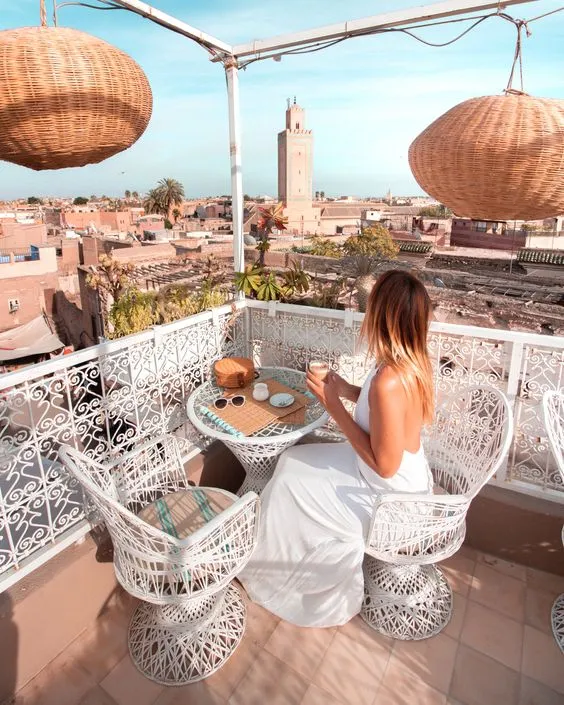
Your 14 days tour from Marrakech begins at Marrakech Menara Airport. Your So Morocco Tours driver will be waiting in the arrivals hall with a name sign, ready to help with your luggage. After a short drive to your riad or hotel, the rest of the day is yours. You can rest after the flight, enjoy mint tea on the rooftop, or take a first short walk toward the medina walls as the call to prayer drifts over the city. Tomorrow you’ll start exploring properly.
Day 2: Marrakech Guided City Tour
Today a licensed local guide shows you around the Red City. You’ll start at the Koutoubia Mosque. Its 12th-century minaret, about 77 meters tall, has guided travelers into Marrakech for more than 800 years and is still the tallest landmark in the old city. Next is the Medersa Ben Youssef, a 16th-century Quranic school. Its courtyard is covered in carved cedar, stucco and zellige tilework, and upstairs you can see the small rooms where students once lived.
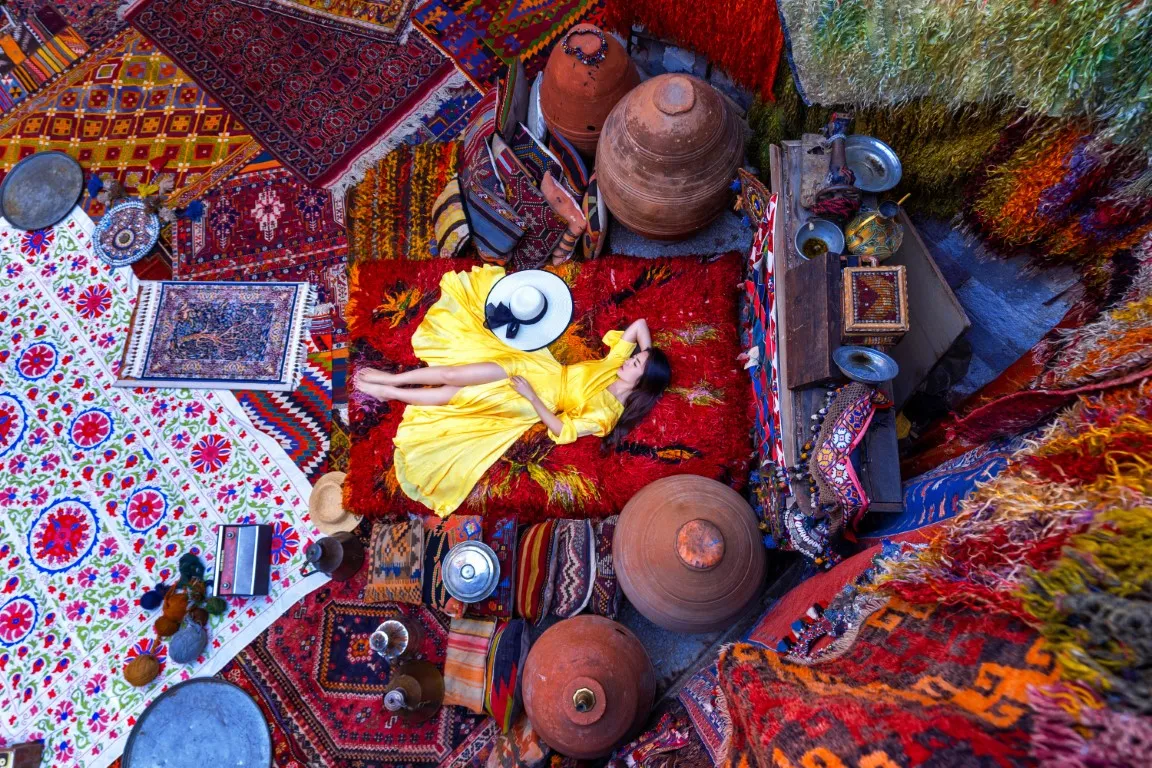
The tour continues to Bahia Palace, built in the late 19th century for the grand vizier Ba Ahmed. Its name means “brilliance,” and it has shaded gardens, painted ceilings and courtyards designed to catch the breeze. In the afternoon you’re free to explore the souks: lanes of spice pyramids, lanterns, leather slippers and handwoven rugs, each quarter known for its own craft. At sunset, head to Jemaa el-Fnaa. As the light fades, the square fills with grill smoke, storytellers, musicians and fresh orange juice stalls, one of the most memorable evenings on any Morocco trip.
Day 3: Marrakech – Ait Benhaddou – Ouarzazate – Dades Valley [334 km]
This morning you leave Marrakech and climb into the High Atlas on the Tizi n’Tichka Pass, the highest main road pass in Morocco at 2,260 meters. The road winds past walnut trees, terraced fields and Amazigh (Berber) villages clinging to the slopes, with plenty of photo stops along the way.
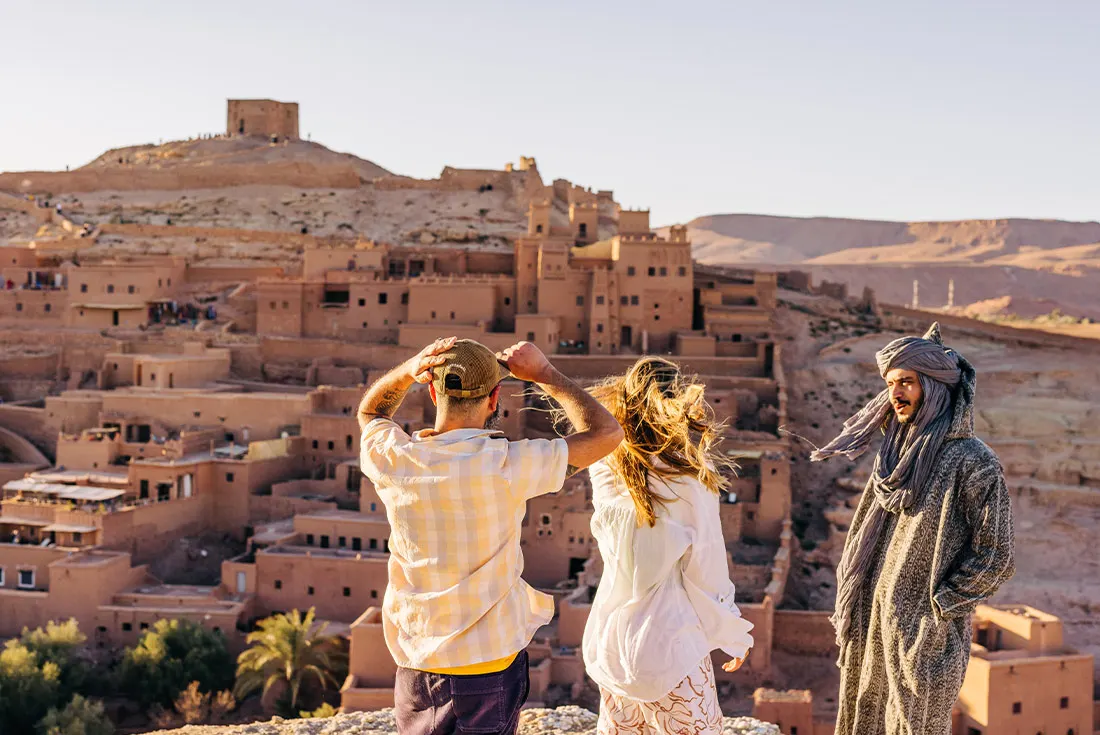
Your first major stop is Ait Benhaddou, a ksar (fortified village) of earthen towers and walls that has been a UNESCO World Heritage Site since 1987. It once guarded the caravan route between the Sahara and Marrakech, and its skyline has since appeared in films such as Gladiator and in Game of Thrones. Climb to the granary at the top for a view over the whole village and the valley. Next, you’ll pass through Ouarzazate, the “Hollywood of Africa,” home to large film studios and the gateway to Morocco’s desert south.
The afternoon drive follows the Road of a Thousand Kasbahs through the Valley of Roses near Kelaat M’Gouna. Damask roses grown here are turned into rose water and oils, and the whole valley celebrates the harvest each May. You’ll reach the Dades Valley by evening and spend the night surrounded by red cliffs and quiet mountain air. Dinner is included tonight.
Day 4: Dades Valley – Todra Gorge – Merzouga Desert [258 km]
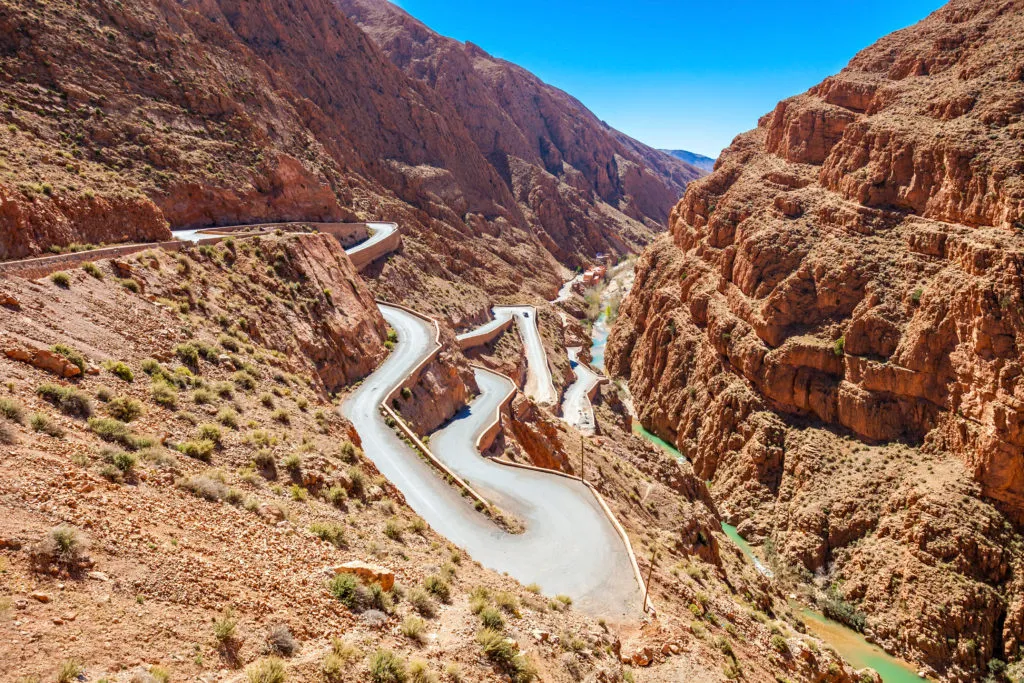
After breakfast, you’ll drive up into the Dades Gorges, where the road climbs in tight hairpin bends between rock walls shaped by wind and water over millions of years. Further along are rock formations locals call “Monkey Fingers,” a favorite with photographers. Then you’ll head to Todra Gorge near Tinghir, where limestone cliffs rise more than 150 meters on either side of a clear stream. At its narrowest point the canyon is only a few meters wide. It’s a cool, shaded spot for a short walk, and you’ll often see climbers on the rock face.
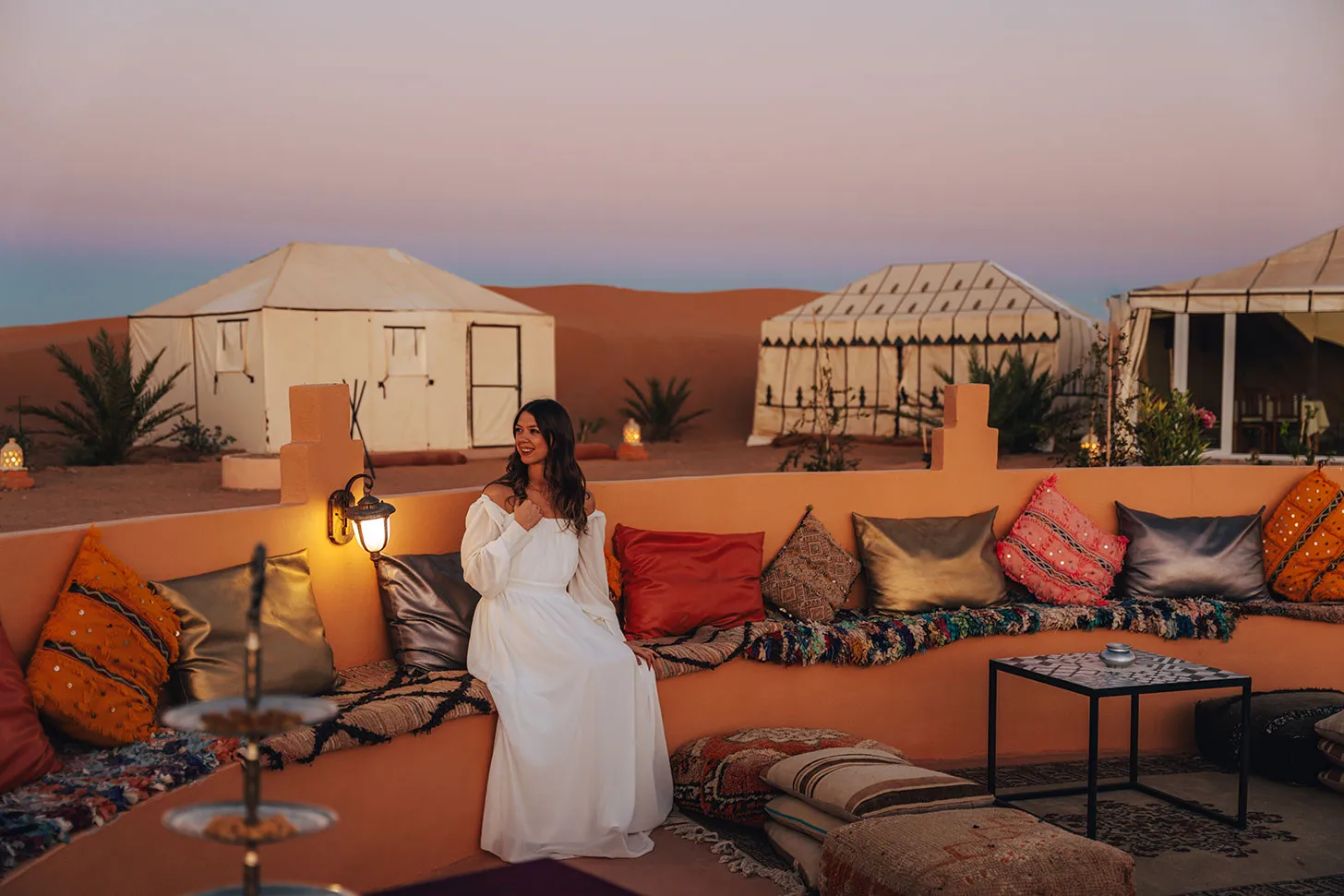
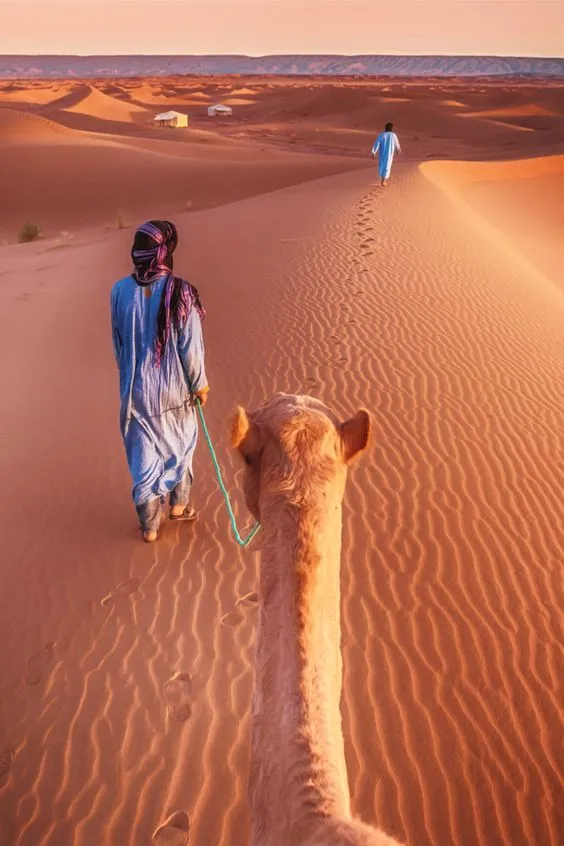
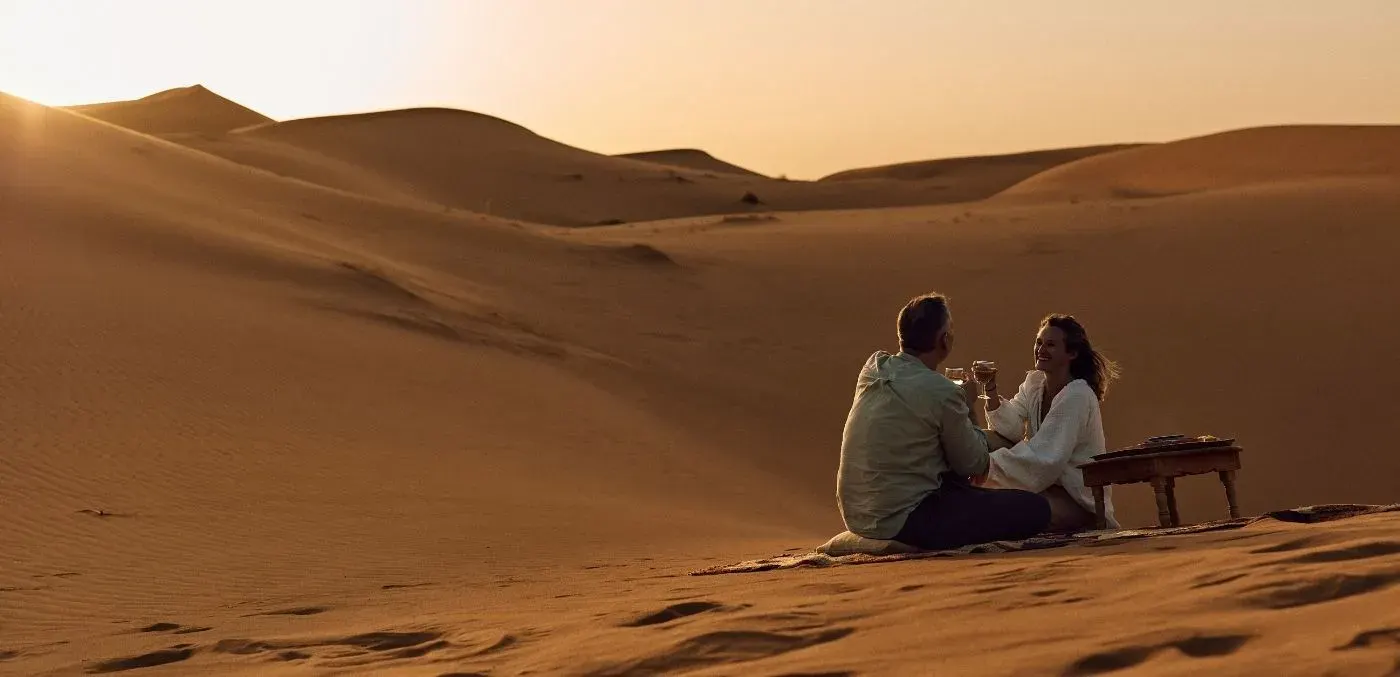
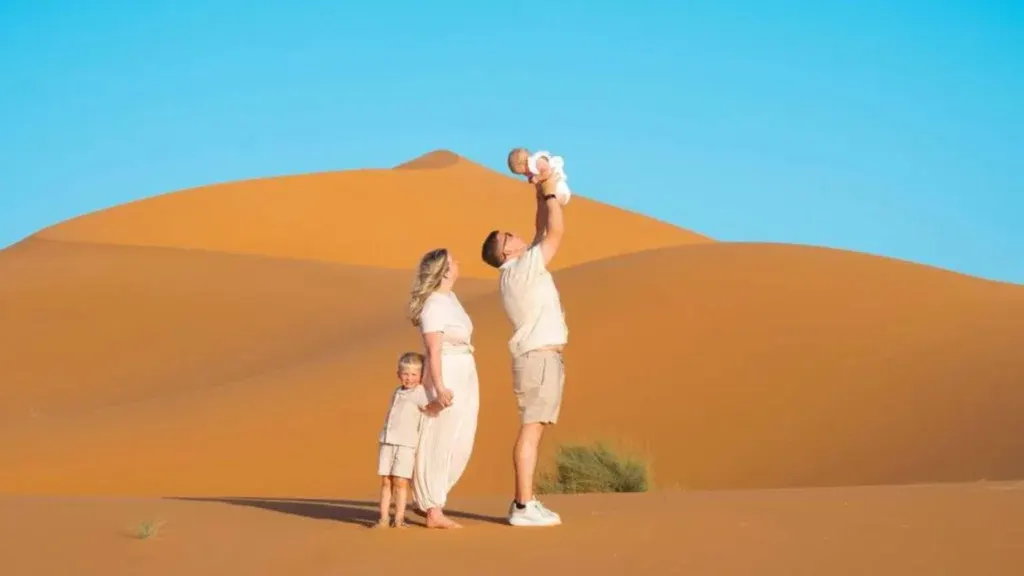
After lunch (not included), the landscape changes quickly. Mountains give way to open hamada (stony desert), then palm oases, and finally the first orange ridges of the Sahara come into view. In the late afternoon you’ll reach Merzouga at the edge of Erg Chebbi, a sea of dunes that rise up to 150 meters. You’ll switch from the car to a camel and ride into the dunes as the sand changes color at sunset. At camp, dinner is served beneath the stars, followed by Berber drumming around the fire. It’s the night most travelers remember longest from their Morocco desert tour.
Day 5: Full Day in Merzouga Desert
Wake early to watch the sunrise over Erg Chebbi from the top of a dune. It’s worth the short climb. Today is a full day in the Sahara, with no long drive. Your first visit is Khamlia, a small village whose people descend from West Africans who came north with the trans-Saharan caravans. They have kept Gnawa music alive: trance-like rhythms played on the guembri (a bass lute) and qraqeb (iron castanets), a living link between Morocco’s African, Amazigh and Arab roots. Musicians usually play for visitors over a glass of tea.
In the afternoon you can visit the palm oases and small desert settlements around Merzouga, or book an optional sandboarding session, quad bike ride or 4×4 dune excursion. If you’d rather just rest, stay at camp and enjoy the silence of the desert and one of the clearest night skies in North Africa. Dinner and overnight are in the desert.
Day 6: Merzouga – Ziz Valley – Midelt – Azrou – Ifrane – Fes [467 km]
Today is the longest drive of the trip, and one of the most varied. Leaving the Sahara, you’ll follow the Ziz Valley, where a green strip of date palms runs through the rocky desert for miles. Stop at a viewpoint to take in the whole oasis below. After a lunch stop in Midelt, known as Morocco’s apple capital, you’ll climb into the Middle Atlas.
Near Azrou the road passes through one of the largest Atlas cedar forests in the world. Wild Barbary macaques, a species found only in Morocco and Algeria, often come right up to the roadside. Next is Ifrane, called the “Switzerland of Morocco” for its sloping red roofs, tidy gardens and winter snow, a surprise after the desert. You’ll arrive in Fes in the evening, ready to explore Morocco’s spiritual and cultural capital tomorrow.
Day 7: Fes Guided Tour – Morocco’s Imperial City
A local guide leads you through Fes el-Bali, the oldest part of the city and a UNESCO World Heritage Site with more than 9,000 lanes, where donkeys and handcarts still carry goods. You’ll begin at Al Quaraouiyine, founded in 859 by Fatima al-Fihri and widely recognized as the oldest continuously operating university in the world. Nearby are the Bou Inania and Al-Attarine madrasas, 14th-century Marinid masterpieces with carved cedar, stucco and zellige covering almost every surface.
Next is the Chouara Tannery, where leather is still dyed by hand in stone pits of saffron, poppy red and indigo, just as it has been for centuries. Take the sprig of mint offered at the entrance and watch from a leather shop terrace above. The rest of the day is spent in the medina’s craft quarters, among coppersmiths, weavers and potters. In a medina this big, having a guide makes a huge difference.
Day 8: Fes – Volubilis – Chefchaouen [225 km]
This morning you’ll drive to Volubilis, the best-preserved Roman site in Morocco and a UNESCO World Heritage Site. It was once one of the Roman Empire’s most remote outposts, and today you can walk past the triumphal arch, the basilica and houses with mosaic floors still in place, including scenes of Orpheus and the labors of Hercules. It shows a chapter of Moroccan history that came centuries before the Islamic era.
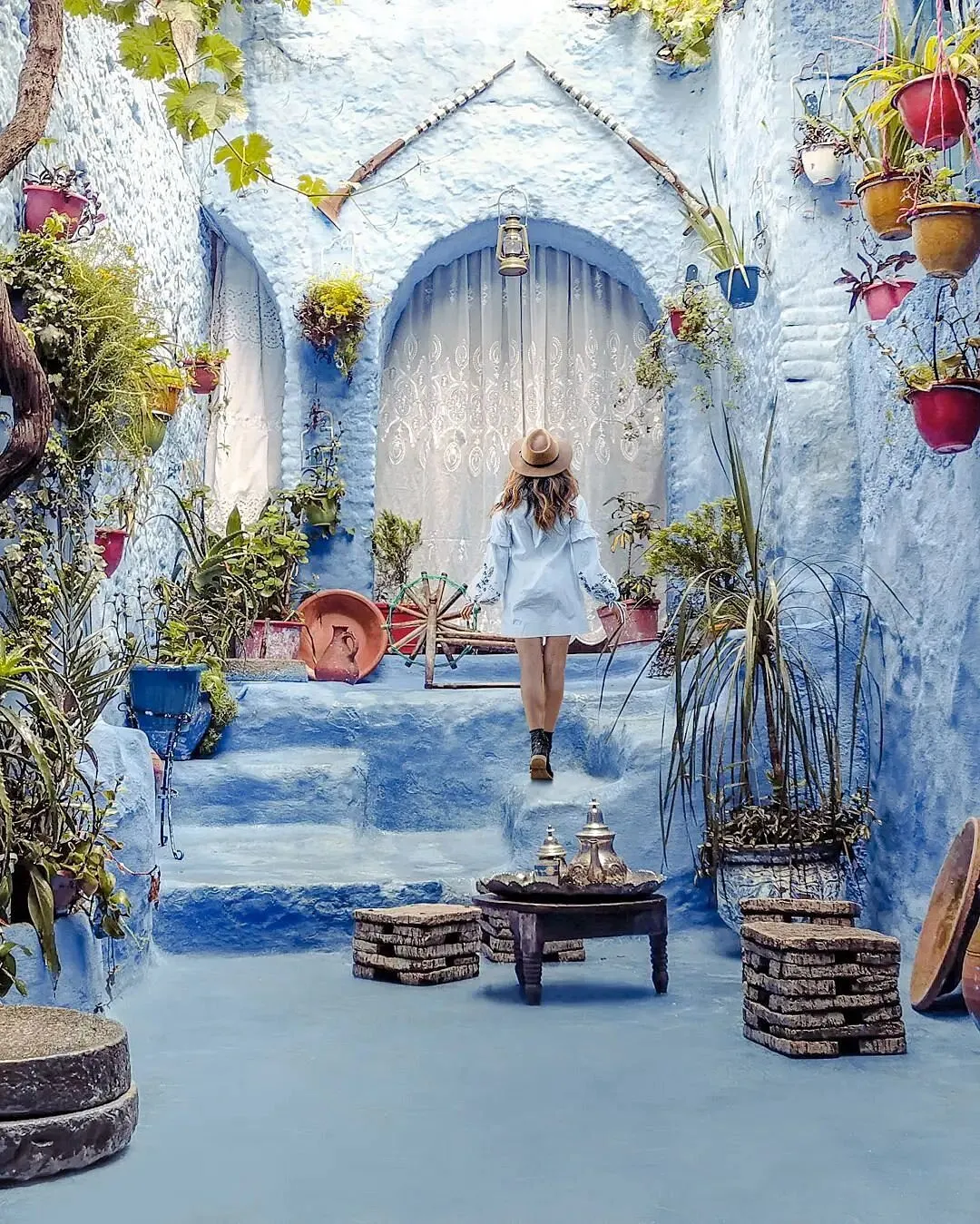
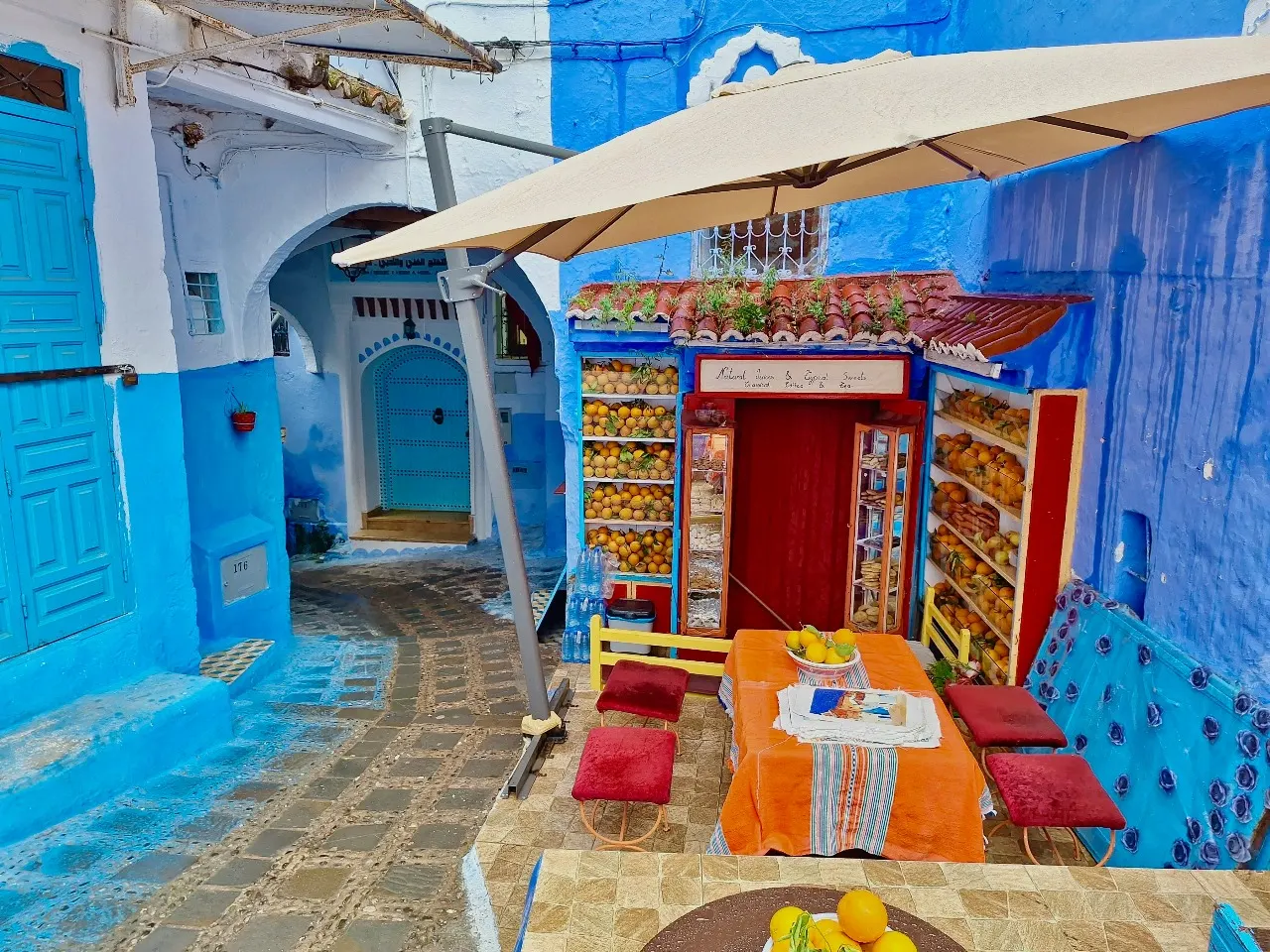
From there, the road climbs north into the Rif Mountains to Chefchaouen, the blue city of Morocco. Founded in 1471, the town is known for its walls, doors and stairways painted in every shade of blue. The easiest way to get to know it is to wander with no plan. In the evening, sit at a café in Plaza Uta el-Hammam, facing the red-walled kasbah, and watch the town settle into night.
Day 9: Chefchaouen Guided Tour & Spanish Mosque Hike
With a local guide, you’ll learn more about Chefchaouen’s history, starting at the Kasbah Museum in the heart of the medina. Its exhibits and garden explain how Andalusian refugees and local Rif Amazigh people shaped the town. Then a gentle 30-minute hike takes you up to the Spanish Mosque, built in the 1920s on a hill east of town. From here you get the best view over Chefchaouen’s blue rooftops and the Rif Mountains, especially near sunset.
The rest of the day is free for relaxed shopping. Chefchaouen is known for handwoven wool blankets and djellabas, local goat cheese, and leather goods, and prices tend to be calmer than in the bigger cities. You can also walk to the Ras el-Ma spring at the edge of the medina, where locals still come for fresh mountain water.
Day 10: Chefchaouen – Rabat – Casablanca [345 km]
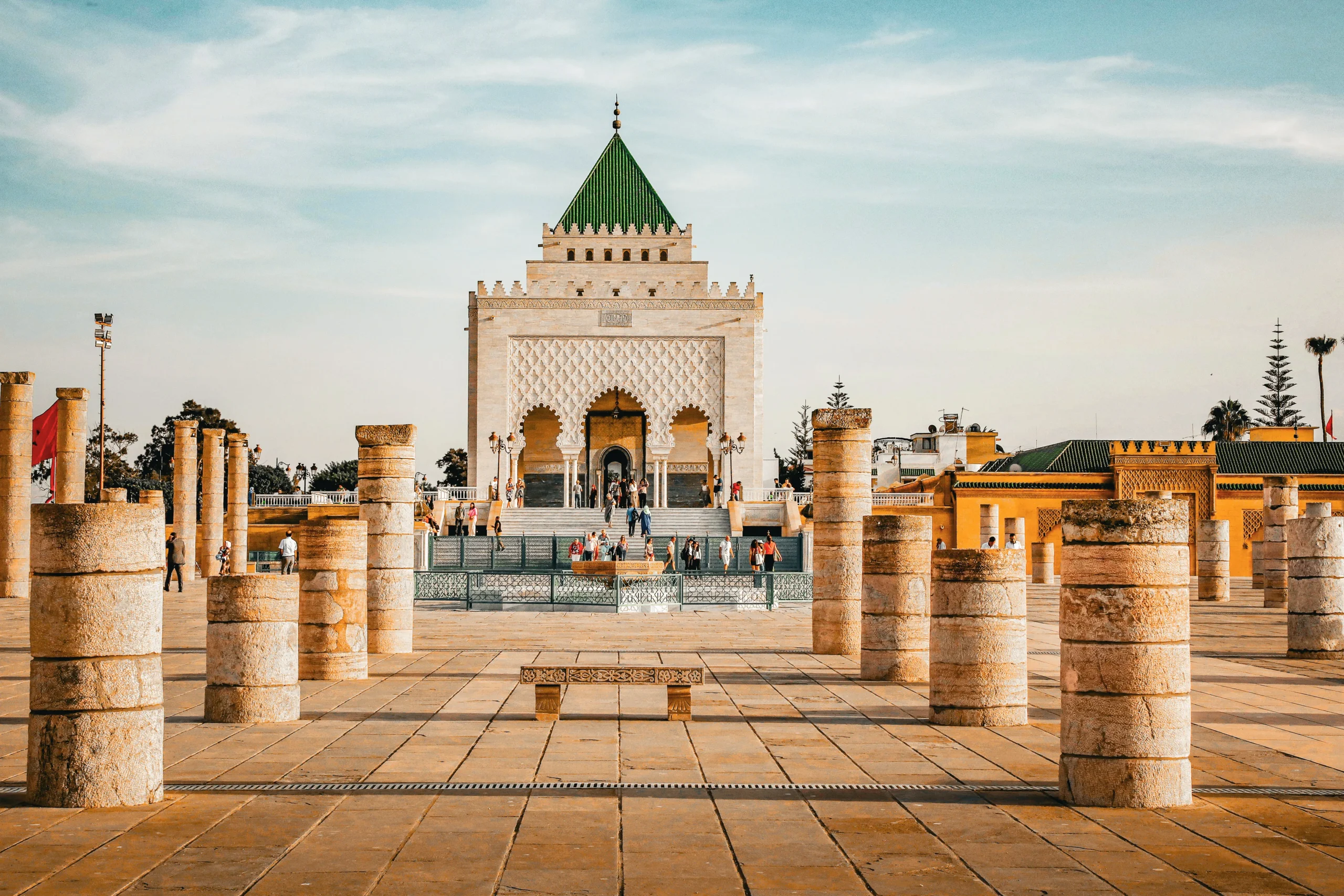
Today you’ll leave the mountains and head to Rabat, Morocco’s capital and a UNESCO-listed city. You’ll see the Hassan Tower, the unfinished 12th-century minaret of what was meant to be the largest mosque of its time, and the nearby Mausoleum of Mohammed V with its royal guards. Then you’ll walk through the Kasbah of the Udayas, a fortified quarter of blue-and-white lanes and Andalusian gardens overlooking the mouth of the Bou Regreg River. Rabat feels calmer and more orderly than Morocco’s other big cities, and it’s often a pleasant surprise for visitors.
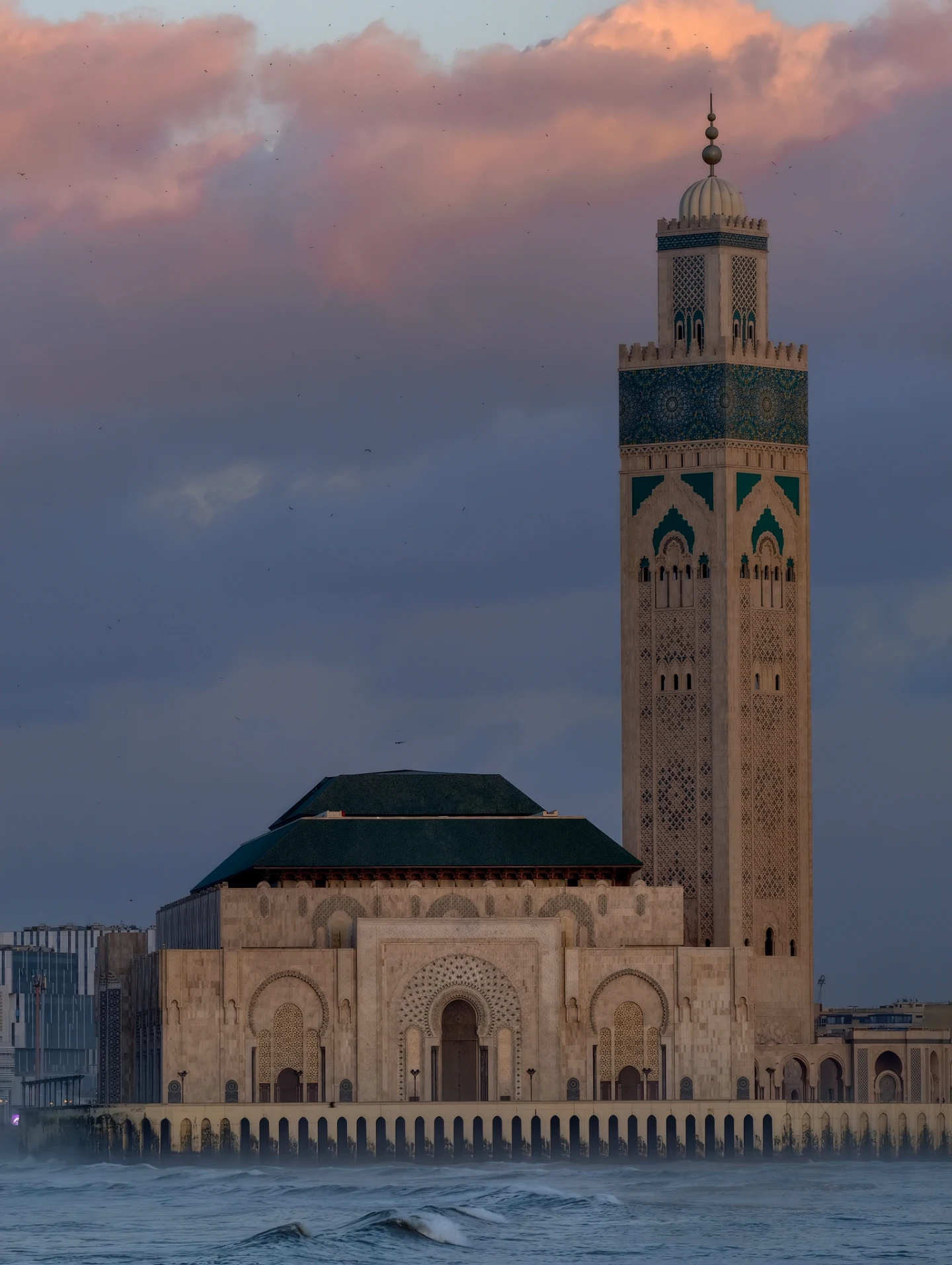
A short drive down the coast takes you to Casablanca, Morocco’s largest city and business center. The highlight is the Hassan II Mosque, one of the largest mosques in the world, partly built over the Atlantic Ocean, with a minaret rising 210 meters. It’s one of the few mosques in Morocco that non-Muslims can visit inside on a guided tour. The size of the prayer hall and the detail of its marble, cedar and zellige are hard to imagine until you see them.
Day 11: Casablanca – Essaouira [376 km]
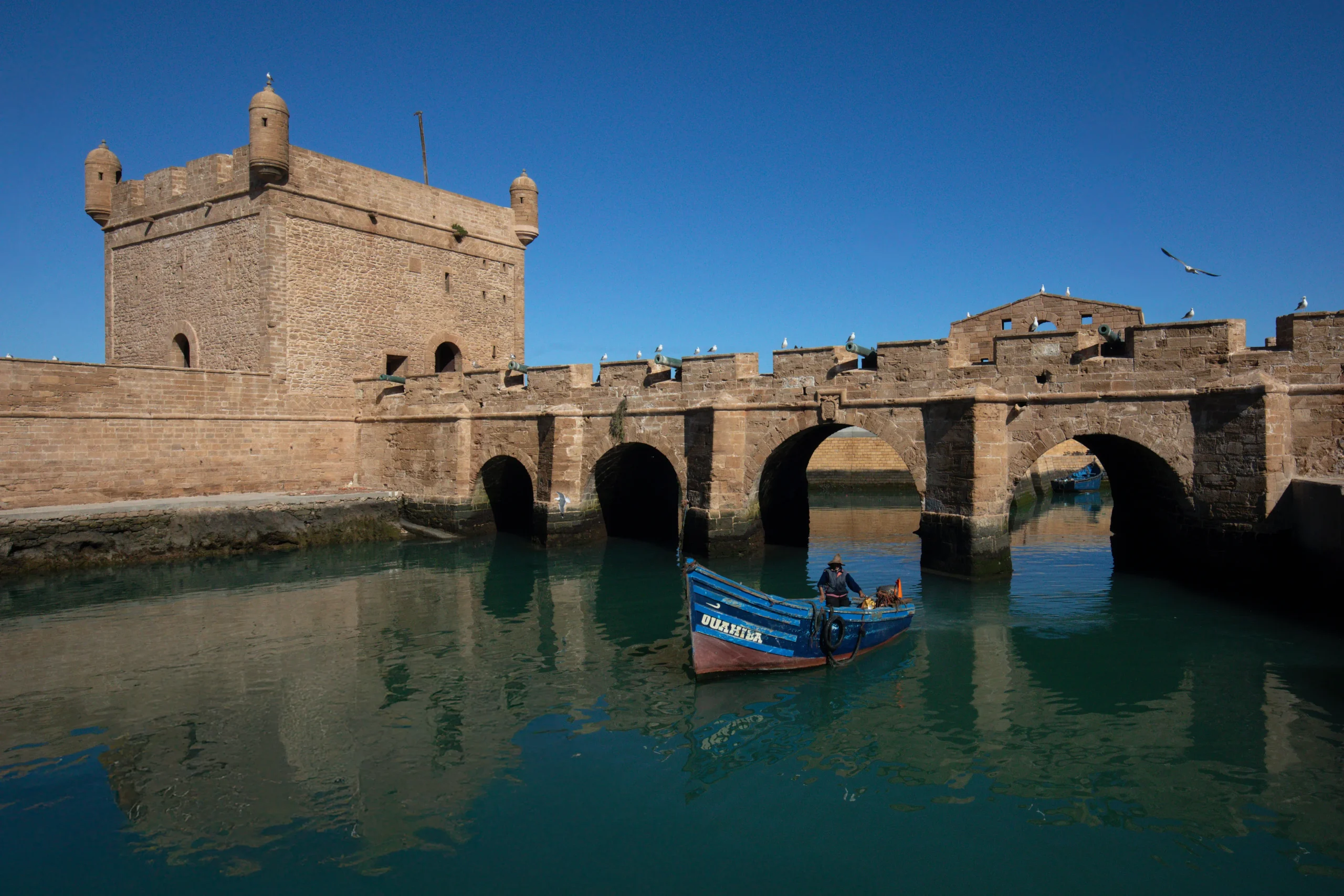
Today you’ll follow the Atlantic coast south past farmland and coastal towns to Essaouira, an old fishing port and trading town whose 18th-century medina is on the UNESCO World Heritage list. The wind that makes it a favorite with kitesurfers also keeps it cool in summer, and the town moves at an easy pace.
Walk the Skala de la Ville, the sea ramparts lined with old bronze cannons, for views over the ocean and the Mogador islands. Then follow the medina’s whitewashed lanes and blue shutters to the woodworkers’ quarter, where craftsmen make boxes and furniture from fragrant thuya wood found almost only in this region. For lunch, head to the fishing harbor and choose your seafood fresh from the day’s catch, grilled while you wait. After the big cities, Essaouira is a welcome change of pace.
Day 12: Essaouira – Marrakech [178 km]
Enjoy a slow final morning in Essaouira, with coffee by the harbor or a walk on the beach, before driving back to Marrakech through argan country. You might see goats standing in the argan trees along the way, and you can stop at a women’s cooperative to see how argan oil is pressed by hand. The afternoon is free in Marrakech. You can rest at your riad, try a traditional hammam, visit the Jardin Majorelle, or go back to a corner of the souks you liked.
Day 13: Ourika Valley Day Trip [120 km]
Today’s day trip shows you the green side of the High Atlas. The Ourika Valley, about an hour from Marrakech, is a landscape of rivers, walnut and olive groves, terraced fields and mud-brick Amazigh villages. Many visitors stop at a traditional Berber house for mint tea and a look at how mountain families live.
At Setti Fatma, the last village in the valley, a short hike with a local mountain guide climbs over rocks and small streams to the first of the Seven Waterfalls. The air is cool and it’s a lovely reward for an easy walk. Lunch is usually at one of the simple restaurants by the river, with tables set right beside the water. It’s a relaxed last day before you return to Marrakech for your final night.
Day 14: Departure – Transfer to Marrakech or Casablanca Airport
Your 14 days Morocco itinerary from Marrakech ends with a private transfer to Marrakech Menara Airport or Casablanca Mohammed V Airport, depending on your flight. Over two weeks you’ll have crossed mountains, slept in the Sahara, explored the imperial cities and relaxed on the Atlantic coast. Everyone at So Morocco Tours hopes it gave you a real sense of the country, and we’d love to welcome you back for your next Moroccan adventure.